
Dust Measurement in Reinforced Concrete Stacks
Reliable dust measurement despite local condensation
Coal-fired power
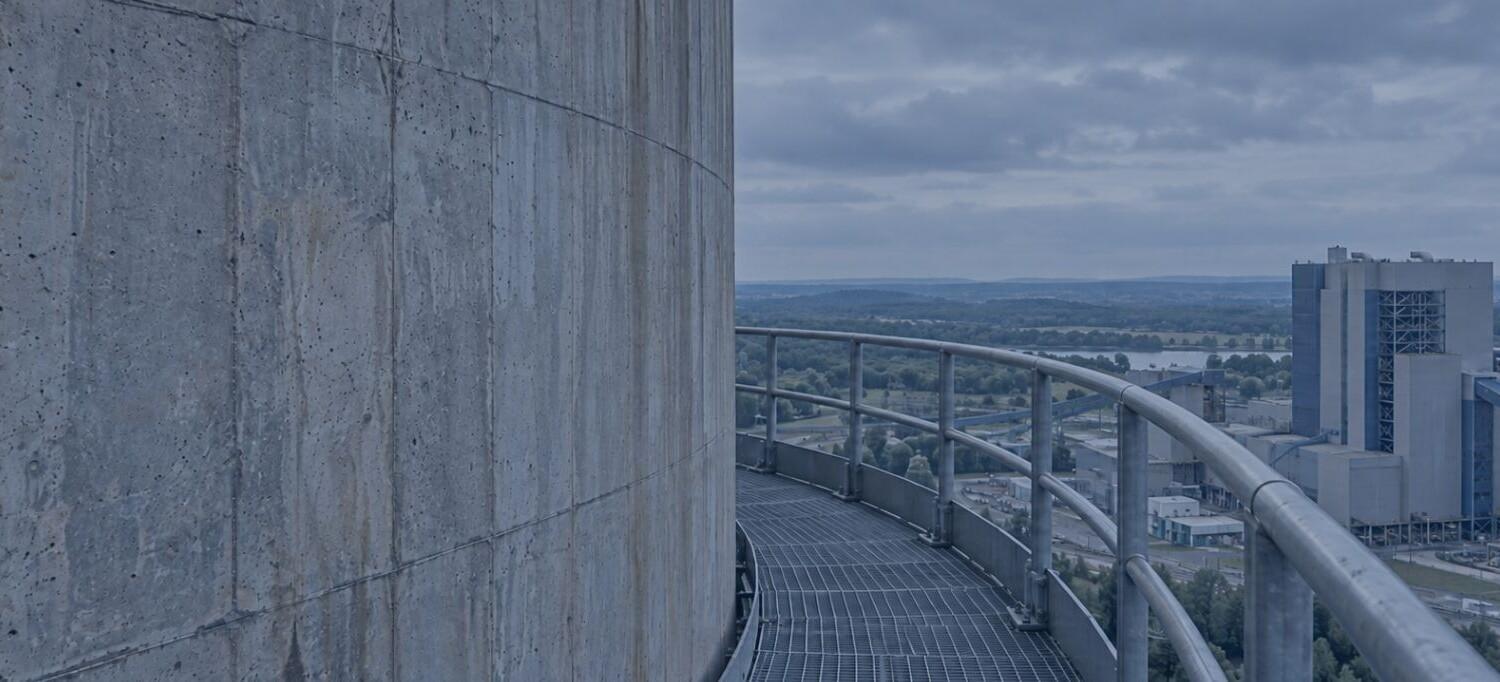
plant stack in Asia
Challenge: condensation affecting the sensing probe
Solution: condensation prevented from interfering with the measurement
In reinforced concrete stacks, condensation can form where the dust sensor passes through the thick stack wall, interfering with measurement. Correct installation helps keep moisture away from the sensing probe and maintain reliable operation.
The challenge
Reinforced concrete stacks are used in power generation and other industrial applications, and their thick walls can create a specific measurement challenge. Because concrete is a poor heat conductor, the sensor mounting point through the stack wall may be significantly cooler than the flue gas, allowing moisture to condense around the probe because of the local temperature difference.
This problem was encountered during installation of a Sintrol S305 on a coal-fired power plant stack in Asia. Inspection found moisture and wet dust around the sensor mounting point and on the probe. The RCC wall at the measurement point was approximately 500 mm thick.
The solution
Sintrol developed a case-specific installation accessory that formed an airtight protective cage around the sensor probe through the thickness of the concrete wall. The arrangement isolated the probe from condensation forming in the cooler wall penetration while leaving the sensing section exposed to the flue-gas flow inside the stack.
The solution prevented local condensation from affecting the sensing probe, without the need for purge air. This allowed reliable particulate measurement to continue under the existing stack conditions.
Results
Reliable dust measurement maintained despite local condensation.
The monitor operated reliably at a dust concentration of approximately 35-40 mg/m³, with the measurement signal not affected by droplets forming around the sensor mounting point.
- Local condensation prevented from interfering with the sensor probe
- No purge air required for the solution
- Stable particulate measurement at approximately 35-40 mg/m³
- Long-term operation in a 500 mm-thick reinforced concrete stack wall
How it works
S305QAL uses Sintrol’s Inductive Electrification measurement principle. In RCC stacks, reliable measurement also depends on installation design, because local condensation at the mounting point must be kept away from the sensing probe. Where the flue gas itself is wet or condensing, EXO QAL uses an extractive measurement approach instead. A heated sampling probe extracts and conditions the gas sample above the water and acid dew points before particulate concentration is measured using optical forward-scattering technology.

John Korpi
Area Sales Director
Dust Monitoring Solutions


Sintrol
S305QAL / S305QAL Ex Dust Monitor
S305QAL is an EN15267-3 QAL1 certified stack monitor for official particulate emissions measurement. Reliable, low-maintenance, and robust, it is approved for use e.g. in waste incineration and combustion plants.
Sintrol
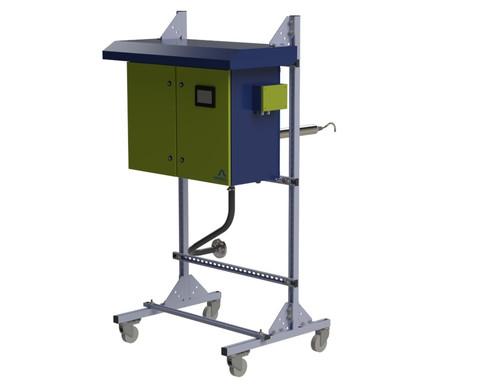
EXO QAL Dust Monitor for Wet Gases
EXO QAL is an extractive optical dust monitor for continuous particulate measurement in wet, condensing and demanding industrial process conditions.

Sintrol
DustCloud
Monitor dust measurements, device status and alerts across multiple locations with DustCloud, Sintrol’s cloud-based industrial dust monitoring service.