
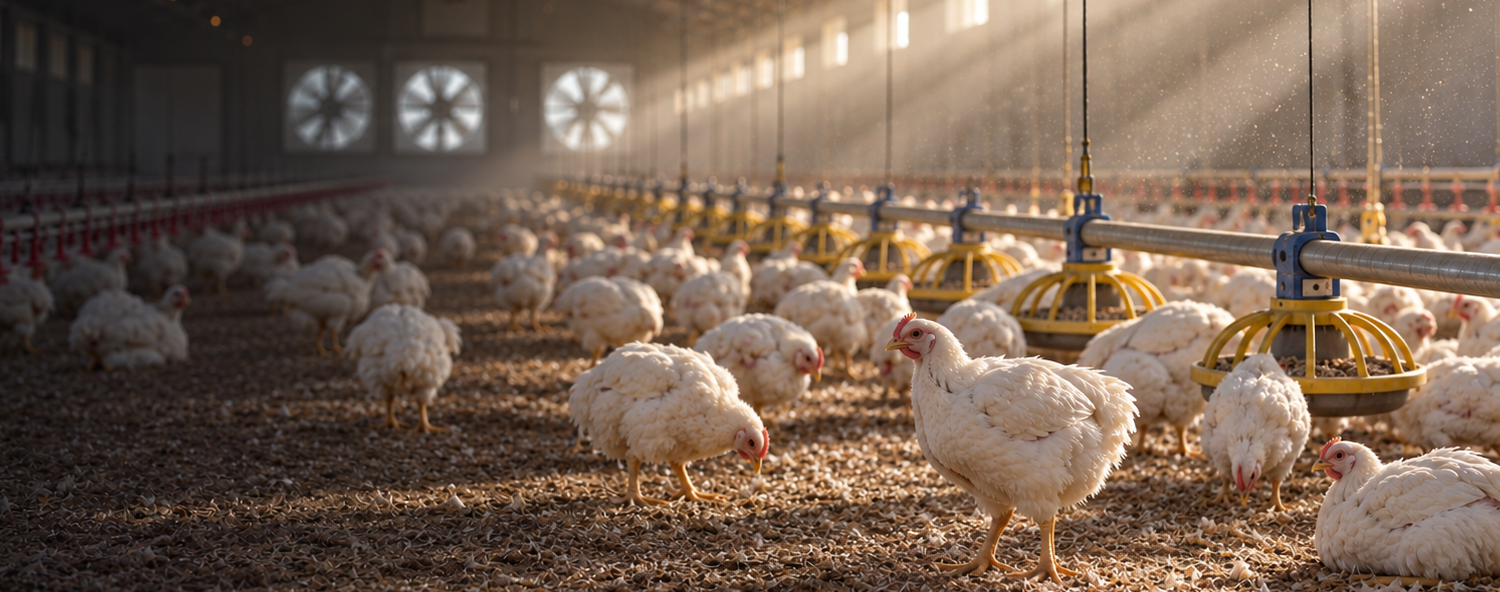
When do dust levels peak in your poultry houses?
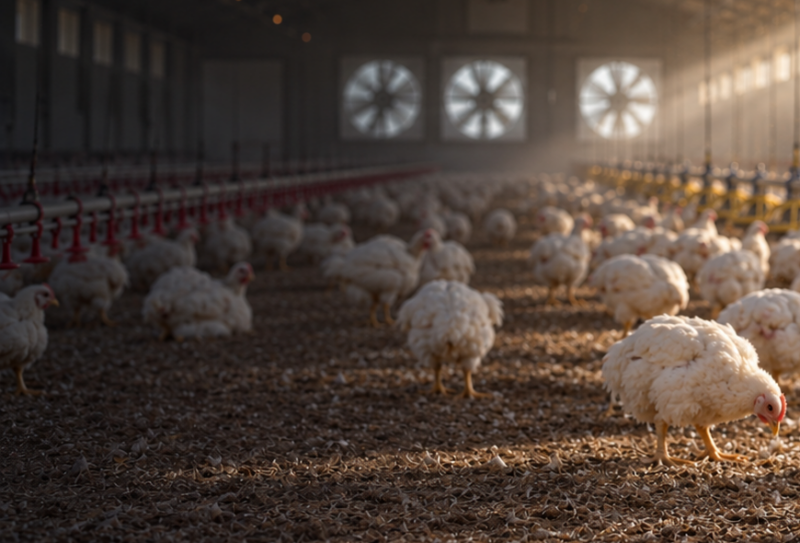
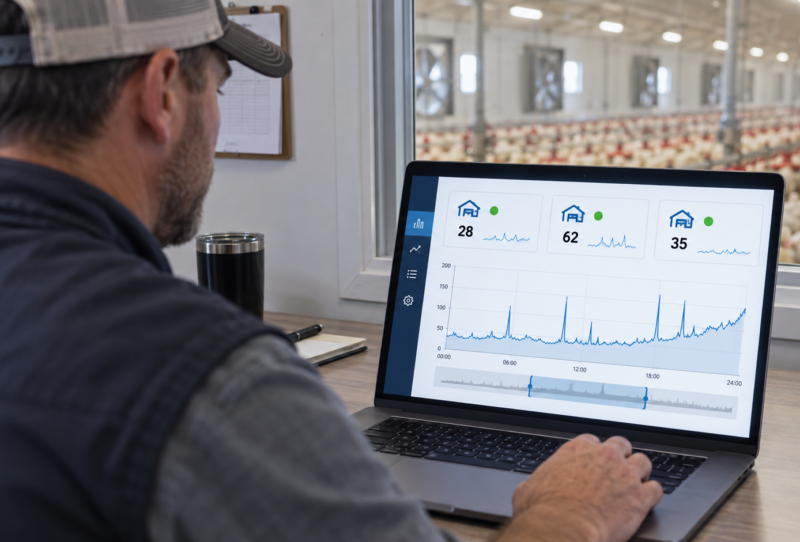
Airborne dust levels can change significantly during feeding, litter handling, bird movement, catching and clean-out. Without continuous data, unwanted dust events and the highest dust peaks may go unnoticed.
Continuous dust monitoring helps poultry producers detect unwanted dust events, understand when dust levels increase, compare conditions across production cycles and evaluate the impact of ventilation and dust-control measures.
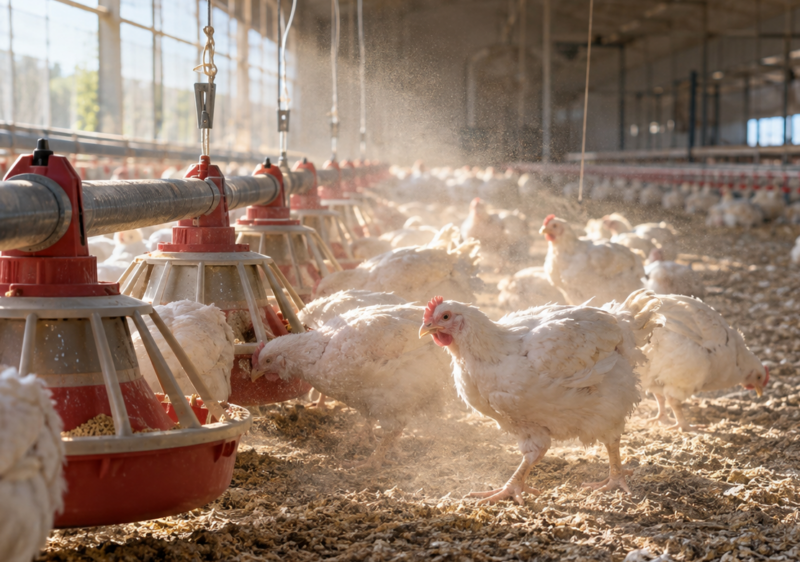
Dust is not constant throughout the production cycle
A poultry house may look clear during a routine inspection while experiencing considerably higher dust levels during other activities.
Dust conditions can be affected by:
- Feeding and feed distribution
- Litter condition and handling
- Bird activity and movement
- Ventilation settings
- Bird catching and load-out
- House clean-out
- Changes in temperature and humidity
- Different stages of the production cycle
Occasional measurements provide information about a single moment. Continuous monitoring reveals how dust conditions develop over hours, days and complete production cycles.
Could unwanted dust events be occurring without you knowing it?
Without continuous monitoring, it can be difficult to answer basic operational questions:
- When are dust levels at their highest?
- Are unwanted dust events occurring during specific activities?
- Are conditions different between poultry houses?
- Does changing the ventilation reduce airborne dust?
- How do dust levels change as birds grow?
- Are dust-control measures producing measurable results?
- What happens during catching, load-out and clean-out?
Real-time monitoring replaces assumptions with comparable data.
Turn dust data into practical insight
Continuous monitoring gives poultry producers a clearer view of conditions inside their houses.
Identify dust peaks
See when airborne dust increases and connect the changes with specific activities or operating conditions.
Compare poultry houses
Identify differences between buildings, ventilation strategies, litter types or production cycles.
Evaluate improvements
Measure conditions before and after changes to ventilation, litter management or working practices.
Follow complete production cycles
Understand how dust conditions develop instead of relying on individual measurements taken at isolated points in time.
Support research and development
Collect consistent data for ventilation studies, animal welfare projects and the development of dust-control methods.
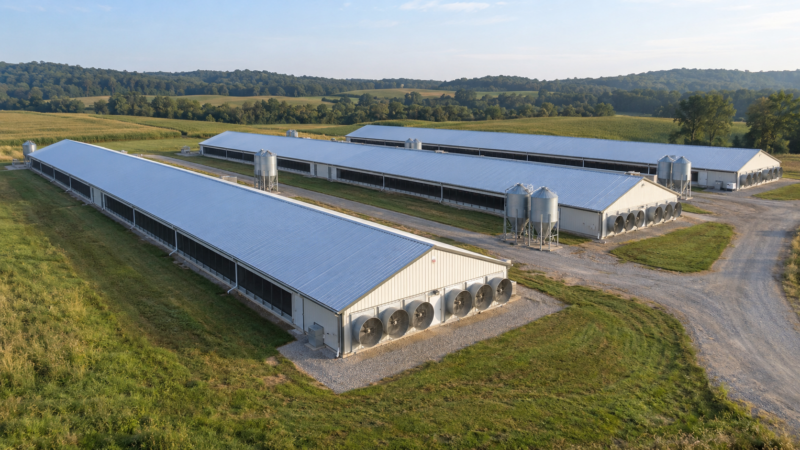
Where can continuous dust monitoring be used?
Continuous monitoring can support:
- Broiler houses
- Layer houses
- Breeder houses
- Turkey production
- Poultry research facilities
- Ventilation studies
- Animal welfare projects
- Dust-control trials
- Comparisons between buildings and production cycles
The monitoring setup should be selected according to the building, ventilation system, activities and the purpose of the measurement.
What should a poultry house dust monitoring system provide?
A practical monitoring solution should be able to:
- Measure total suspended particles in real time
- Operate continuously in demanding poultry environments
- Detect both gradual changes and short dust peaks
- Store data for later comparison and analysis
- Require minimal routine maintenance
- Be positioned where representative measurements are needed
Sintrol helps determine suitable measurement locations and monitoring arrangements based on the facility and the information you need.
Continuous poultry house monitoring with DumoPro
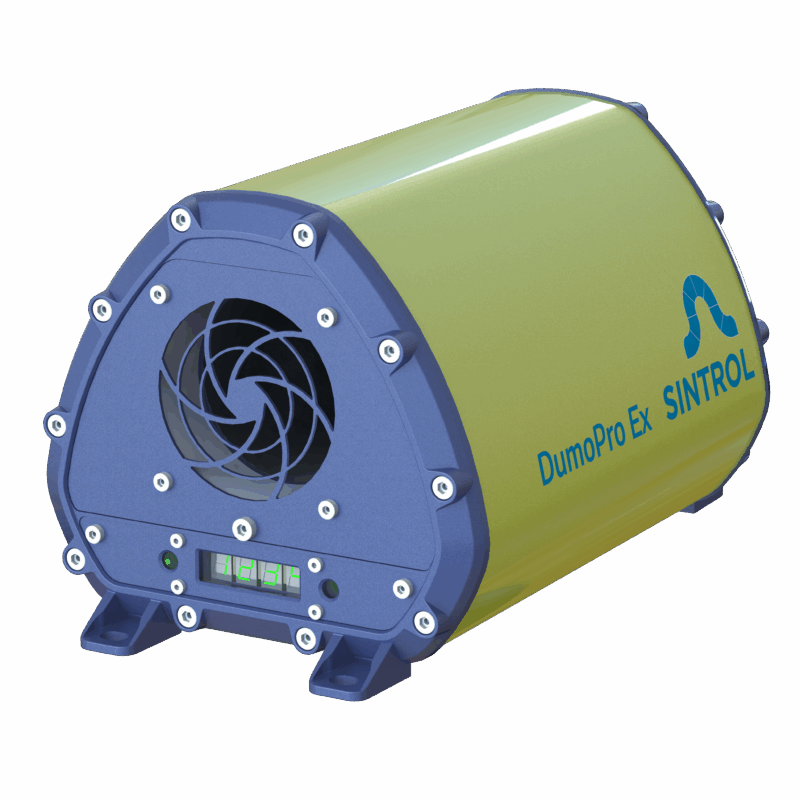
DumoPro is Sintrol’s real-time dust monitoring solution for demanding indoor environments.
It provides continuous total suspended particle data, helping poultry producers, researchers and technical specialists detect unwanted dust events and understand how conditions change during daily activities and throughout the production cycle.
DumoPro can be used to:
- Identify dust peaks as they occur
- Compare different poultry houses
- Follow changes over time
- Evaluate ventilation and dust-control measures
- Collect data from trials and research projects
Not sure where or how to start monitoring?
Every poultry facility is different. The appropriate monitoring arrangement depends on the building, ventilation, production activities and what you want to learn from the data.
Tell us about your poultry houses and your monitoring objective. Sintrol’s dust monitoring specialists will help you assess the application.
FAQ
Why use continuous monitoring instead of occasional measurements?
Dust levels can change rapidly according to bird activity, ventilation and production tasks. Continuous monitoring provides information about both short peaks and longer-term trends.
What does DumoPro measure?
DumoPro provides real-time total suspended particle data for monitoring changes in airborne dust conditions.
Can different poultry houses be compared?
Yes. Using comparable monitoring arrangements can help identify differences between houses, operating practices and production cycles.
Can monitoring show whether a ventilation change is working?
Monitoring conditions before and after a change can help evaluate its effect on airborne dust levels.
Where should the monitor be installed?
The location depends on the ventilation system, building layout and monitoring objective. Sintrol can help assess suitable measurement locations.